- Services
- Dynamic Captions
- Animated Avatars
- BWT Videos
- ChatBot Agents

AI ChatbotsSupport more customers with a friendly greeting and helpful chatbot agent.
- Chatbots Category
- Video Editing

What Is Search Intent? A guide For Google and AI Chatbots 2026
 What Is Search Intent? That is a good question, literally. It is what people are really looking for when they type or say a query. Your intent - the result you want - may be different from what Google or an AI chatbot thinks you want.
When your query is vague, Google guesses based on patterns from billions of similar keyword searches. It often gets close, but sometimes misses the mark.
AI chatbots, on the other hand, don't just match keywords - they interpret meaning. They analyze your words, context, and goals to understand what you are trying to accomplish. Instead of only showing links, they aim to do what you need - whether that's explaining, comparing, deciding, or taking action.
Quick Summary:
- Google's classic model: Navigational, Informational, Commercial, Transactional.
- AI chatbots' modern model: Informational, Action, Decision, Transactional, Navigational AND Sematical.
- Key take away: Google focuses on what you want to see, find or buy; AI focuses on what you want to do.
- Result: Better queries = better answers, whether you're using search engines or AI chatbots.
- Navagtional searches are when people are looking to find a particular page or website, to locate something on a map or a website. "Where is...?", "... near me?", "Directions to...?" Can return a map or a website list depending on the information that you provide.
- Informational searches are when a user is looking to answer a question. "How do I...", "Can I...?" "When did this happen?" Will return websites or YouTube Videos.
- Commercial searches are for when you are looking to purchase something. "How much does it cost to buy...?", "auto mechanics that fix...?", "best airline to paradise...?".
- Transactional searches are when searchers are ready to buy online. "Free delivery", "Best price of tomatoes?", "Amazon running shoes?" can return ads for products and services.
This is important for content providers because your idea of a well optimized page may be different than what Google thinks a searcher is looking for. For navigational and transactional optimization it's pretty straight forward. But for informational searches it gets more tricky. Content providers need to try to understand what searchers are looking for and not what they want to say.
For navigational searches user typically know what type of website they are looking. For example a navigational search could be "websites about home improvement." Where as an informational search would be "how do I do home improvement?" And a transactional search example may be "Home improvement stores near me."
Google attempts to answer the question "is this user looking for a particular webpage or website, information about something or something to purchase," then returns results along those lines. Google doesn't always get it right and sometimes retuns the wrong types of results.
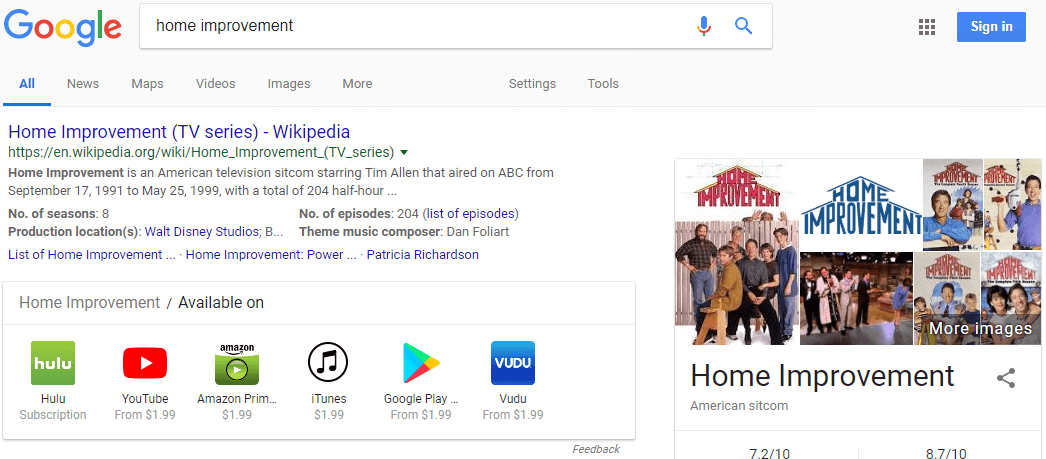
Example: if you type in the search phrase "home improvement" (informational) Google may assume you are looking for infomation about the TV series 'Home Improvement' (1991 to 1999) with Tim Allen. And you get a bunch of results about a TV show from the 90's.
If you type in the search phrase "home improvement tools." (informational) Google might assume you are looking to learn about someting and return list of websites by experts like Angi or Thumbtack and Home Depot.
If you type in a phrase like "home improvement experts" (navigational) Google may return a list of websites that specialize in listing other businesses like Angi or Thumbtack, Yelp and BBB (Better Business Bureau). Thinking you are looking to find an expert. As opposed to becoming one.
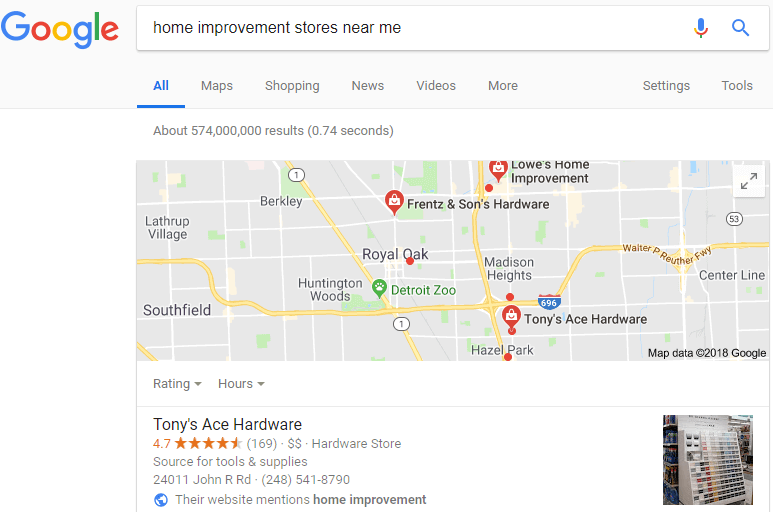
If you type in "home improvement stores near me,' (transactional) Google will probably assume you are looking to buy some tools or supplies and return a list of businesses that sell stuff. For example Ace Hardware, Walmart, Home Depot, Amazon and eBay.
Google doesn't always get it right. Your search intent maybe different than what Google thinks you want to see. Keep in mind Google determines what they think you are looking for based on probability equations generated by previous searches. If your query is not well defined you get what other people have clicked on before.
How To Get Good Results From Google Search Intent
Now that you know how Google decides what pages they think you are looking for you have to ask yourself "what was I looking for?" If you get terrible results it is because Google doesn't understand your search intent. To fix that here a few tips you can use to get the results you want.
- Navigational searches use keyword phrases like 'websites.' Example: "home improvement websites." You will likely get a list of home improvement websites Like AngiesList, HomeAdvisor, Thumbtack and similar websites.
- Informational searches - use keywords that ask a question 'who, what, when, where, why' or phrase like 'how do I' and 'learn about.' Example 'How do I learn about home improvement?' Google will return a list of informational websites that actually try to teach you something.
- Transactional searches - use keywords that indicate you want to buy something, like 'store' 'buy' A good one is 'near me.' Google assumes you are looking to go somewhere to get something. Example. "Home improvement store near me," will probably return a list of businesses that sell home improvement tools, services or supplies that are close to home.
How AI Chatbots Interpret Search Intent (2026)
 Chatbots are different than search engines in the they use different criteria to try and understand what you really want, which are: Contextual, task, Sematic, and Entity intent.
- Contextual intent: from previous conversations or conversational history. Over time the chatbot builds a cache of imformation about you and can referrence that information. Kind of like a memory storage you can interact with.
- Task intent: or what are you trying to accomplish. Some chatbots like MS Copilot can interact with the apps and screen that you are using. For instance filling in an online form or working with Microsoft 365 tools like Word, Excel, Outlook or OneDrive.
- Sematic intent: is where the chatbot tries to understand "what you really meant" not your actual literal words. It will base its responses on previous conversations you had. Even if you don't use keyword tools like "compare" "write" or "explain" it will infer this is what you want.
- Entity intent: is when AI recognizes people, products, services, brand names and topics the user is referrencing.
AI chatbots don't rely on keyword probability. They rely on semantic meaning and task intent. AI Intent Categories:
- Informational intent: You want an explanation or knowledge.
Examples: "What is search intent?", "Explain how SEO works?" - Action intent: You want the AI to do something for you.
Examples: "Write me a home improvement checklist.", "Can you generate a blog post about?" - Decision intent: You want help choosing between options.
Examples: "Which is better: Home Depot or Lowes?", "Compare bathroom vanity materials: stone or plastic vs wood." - Transactional intent: You want to find where to buy or see prices.
Examples: "Find me the cheapest cordless drill.", "Show me deals on bathroom tiles." - Navigational intent: You want to reach a specific site or resource.
Examples: "Open the Home Depot website.", "Find the Best Website Tools for this task."
The big diffefernce between search engines and chatbots is: search engines return a list of results where as chaybot can perform tasks directly: "write me content for", "compare these two products", "plan a road trip", "summarize this webpage", "calculate a trajectory to Neptune."
The big difference is chatbots perform tasks while search engines look for matching results. A chatbot collaborates with you to achieve results, while search engines return existing results.
Search Intent for Content Creators
If you build websites, blogs, or landing pages, understanding search intent is a valuable skill you can develop. AI can help you in many ways when used properly. An AI chatbot interaction can help you with:
- Which keywords you target (informational vs transactional). A chatbot can recommend and explain which topics to emphasize and which not to.
- How you structure your pages (guides vs product pages vs comparison pages). Get help setting up the structure and amount of content and in what place and even tell you if you missed anything.
- What calls to action you use (learn more, buy now, compare options). You could ask a chatbot to help you write the perfect hook for the product or service you are targeting.
- How AI tools summarize and recommend your content to users .A chatbot can even write the content and code it for you. A search engine cannot help you with that!
When your page clearly matches a specific intent, both Google and AI chatbots are more likely to use your content as a relevant answer. When your website pages are structured with the help of AI (as this one is) it should perform better.
When writing your own content DO NOT simply copy what the chatbot says. Better to rewrite the recommendations in your own words. Like I did for this page.
FAQ: Search Intent in 2026
Search intent is the real purpose behind a users query or what they actually want to accomplish when they type something into a search engine or prompt an AI chatbot.
It matters because it determines what results you get. When your query matches your intent, Google and AI chatbots can return more accurate, helpful answers. When it doesn't, you get irrelevant or confusing results. It hallucinates. (At least that is what some gurus call a big mistake.)
No. Google traditionally uses navigational, informational, and transactional intent. Modern AI chatbots use a broader, semantic and task-based model that includes informational, action, decision, transactional, and navigational intent.
Rewrite your query to better match your intent type. Be more specific about whether you want information, a comparison, an action performed, or a place to buy something. Small changes in wording can produce very different results. See "Final Tip."
You structure your pages around clear questions, answers, and intent categories. Titles, headings, and calls to action are aligned with what users are trying to accomplish or learn, or decide, or buy. This helps both search engines and AI tools understand when and where to recommend your content.

Final Tip
If Google or an AI chatbot gives you bad results, it is usually not because the tools are broken. it is because your query did not fully express your intent. Clarify what you want, rewrite your query or prompt, and specify whether you want information, a decision, or an action.
The better you understand search intent, the better your results and the more powerful your websites and content become. Now go build your own spectacular websites with SBI...

That's it for todays website tips. Hope this helps.
Tim Koen
See Also:
3d Animated Avatars - Meet the family of 3d animated spokespersons.
BWT Videos - animation, video editing and tutorial services.
Easy Blogs Tutorials - 100 blog/websites tutorial page.
SBI Tools - all the AI powered website building tools you will ever need.
Home : Marketing Tips : search intent



61 W. Annabelle Ave. Hazel Park,
MI. 48030-1103, U.S.A.
telephone: (248)546-0374
email: support@best-website-tools.com
© Copyright 2007-2026 All rights Reserved.
Sun: closed
Mon-Fri: 9:00AM to 6:00PM
Sat: 9AM-12:00PM
Closed Holidays
